
Surgery Is Only Part of the Journey
When patients consider facial rejuvenation, attention naturally turns first to the surgical procedure itself — the detailed planning, the operation, and the early visible changes. While these elements are undeniably important, the recovery phase is equally decisive. The way tissues heal, swelling resolves, and skin adapts after surgery ultimately determines the quality, naturalness, and longevity of the final result.
At SHERBER+RAD in Washington, D.C., we view successful facial rejuvenation as a continuous journey. Surgery lays the essential foundation, yet it is the recovery process that refines and preserves the refined contours, symmetry, and harmonious appearance patients seek.
Understanding the Healing Process
Following surgery, the face progresses through several distinct stages of healing. In the first few days, swelling and bruising typically reach their peak. Gradually, inflammation subsides, tissues settle, and the true contours emerge.
A clear understanding of this progression allows patients to maintain realistic expectations. The immediate post-operative appearance does not represent the final outcome. Patience, combined with careful adherence to post-operative guidance, is therefore essential to support optimal tissue repair and refinement.
The Role of Rest and Lifestyle
Recovery extends well beyond the passage of time; it requires deliberate support for the body’s natural healing mechanisms. Adequate rest, balanced nutrition, and proper hydration are fundamental to tissue repair, collagen formation, and the reduction of inflammation.
Patients who cultivate healthy habits both before and after surgery consistently experience smoother recoveries and more predictable, refined results. When the time is appropriate, gentle resumption of physical activity further enhances circulation and overall well-being, contributing meaningfully to the healing process.
Managing Swelling and Discomfort
Some degree of swelling and discomfort is an expected part of recovery, yet these effects can be effectively minimised through precise measures. Head elevation, cold compresses, and adherence to prescribed medications all play important roles in controlling inflammation.
Close monitoring during this period remains equally vital. Should patients notice unexpected asymmetry, prolonged bruising, or unusual discomfort, prompt communication with the care team ensures that any concerns are addressed without delay.
The Impact on Long-Term Results
The recovery phase exerts a direct and lasting influence on final outcomes. Tissues that heal under optimal conditions maintain natural contours, preserve symmetry, and support the rejuvenated appearance for years to come. Even minor disruptions during healing can subtly affect skin smoothness, tissue positioning, and the durability of results.
This is why post-operative guidance at SHERBER+RAD is as meticulous and comprehensive as the surgical plan itself. Every recommendation — from sleep positioning to activity levels — is designed to safeguard the integrity of the procedure and optimise long-term success.
Skin Care After Surgery
The skin, having undergone surgical stress, becomes particularly sensitive during recovery. Gentle cleansing, consistent moisturisation, and rigorous sun protection are indispensable. In many cases, targeted topical treatments further accelerate healing and enhance skin tone and texture.
At SHERBER+RAD, the seamless integration of dermatologic care during this phase complements the structural improvements achieved through deep plane facelifts and other advanced techniques. This combined approach allows patients to realise the full aesthetic potential of both disciplines.
Emotional Recovery
Facial surgery can be physically demanding, yet it also carries emotional dimensions. Many patients experience temporary anxiety regarding swelling or changes in appearance during the early weeks. Recognising that these variations are transient helps alleviate concern and fosters a positive outlook.
Support from family, friends, and the dedicated care team plays a valuable role in emotional healing. Encouraging a focus on gradual progress rather than immediate perfection promotes greater peace of mind and higher satisfaction with the ultimate results.
Following Instructions Is Key
One of the most significant factors influencing the quality of recovery is strict adherence to post-operative instructions. Each guideline — whether concerning activity restrictions, wound care, or follow-up visits — exists for a specific purpose.
Patients who treat recovery with the same discipline as the procedure itself minimise risks, support proper tissue alignment, and protect the surgical investment. This commitment consistently leads to superior and more natural outcomes.
Seeing the Final Results
Recovery represents a gradual revelation of the final transformation. As swelling diminishes and bruising fades, tissues settle into their refined positions. For many individuals, the most striking improvements become evident weeks or even months after surgery.
This reality underscores the importance of patience. The journey extends well beyond the operating room, and attentive care throughout the healing period ensures the most natural and enduring rejuvenation.
Partnership Between Surgeon and Patient
Recovery is a collaborative endeavour. The surgical team provides expert guidance, careful monitoring, and timely intervention when needed. Patients contribute through diligent adherence to instructions, thoughtful self-care, and maintenance of healthy habits.
This partnership strengthens outcomes and cultivates trust. When patients fully understand their active role, they approach the process with greater confidence and empowerment.
Conclusion
Facial rejuvenation encompasses far more than the surgical procedure alone. The recovery process is equally instrumental in achieving results that appear natural, harmonious, and lasting. Elements such as rest, nutrition, meticulous skin care, emotional support, and faithful adherence to guidance all contribute meaningfully to success.
At SHERBER+RAD, we consider recovery an indispensable component of aesthetic medicine. By guiding patients through every stage — from initial consultation to complete healing — we facilitate transformations that are not only profound but also sustainable over time. Surgery may establish the foundation, yet it is the recovery that ensures the result endures beautifully for years to come.
CLINICAL CASES:
67 year old woman 7 months after endoscopic brow lift, deep plane face lift, deep structural neck lift, lower blepharoplasty, microfat grafting, closed rhinoplasty.

Figure 70 year old man 1 year after deep plane face lift, deep structural neck lift, endoscopic brow lift, microfat grafting, upper and lower blepharoplasty, porous polyethylene orbital rim implants [2 stages].

43 year old woman 6 months after endoscopic brow lift, deep plane face lift, deep structural neck lift, lower blepharoplasty, microfat grafting, chin augmentation.
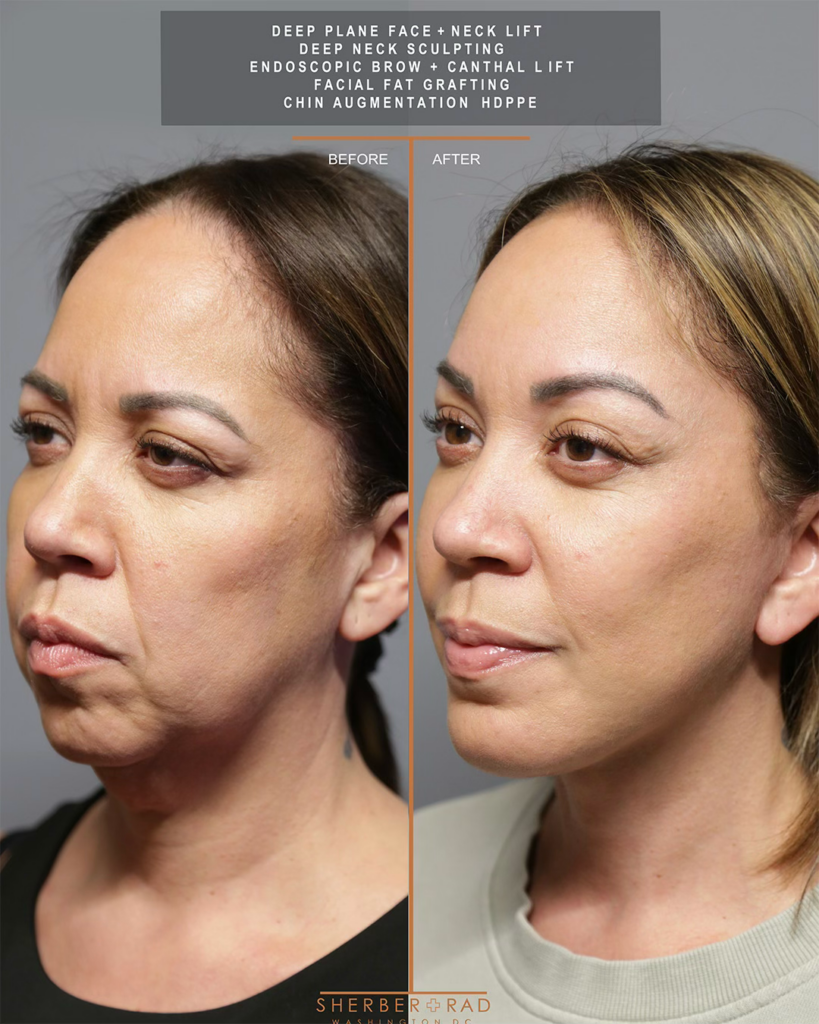
38 year old woman 2 months after endoscopic brow lift, canthoplasty (outer eye corner lift), deep plane face lift, deep structural neck lift, porous polyethylene orbital rim implants, lower blepharoplasty, microfat grafting.
