In aesthetic medicine, patients are constantly exposed to new trends and so-called revolutionary procedures. Social media, celebrity influence, and online marketing can make treatments appear urgent or necessary. While some trends are safe and effective, others may offer minimal benefit or even risk long-term complications.
Evidence-based aesthetic medicine takes a different approach. It relies on rigorous research, clinical data, and proven techniques. Instead of chasing the latest fad, it focuses on treatments that deliver predictable, safe, and natural results. For patients and surgeons alike, this approach provides confidence and peace of mind.
Why Trends Can Be Risky
Trends often gain popularity because they are novel, dramatic, or heavily marketed. However, novelty does not equal safety or efficacy. Many trend-driven procedures lack long-term studies, standardized protocols, or consistent outcomes.
For example, some procedures promise immediate, transformative results with minimal downtime. Patients may be enticed by before-and-after images, but these images often show short-term effects. Long-term follow-up may reveal asymmetry, unnatural appearance, or complications that require corrective procedures. Trend-driven approaches can create disappointment, additional expense, and frustration when results do not meet expectations.
The Advantages of Evidence-Based Practice
Evidence-based aesthetic medicine prioritizes interventions that are scientifically validated. This includes both surgical and non-surgical procedures. Techniques are continually refined through research and clinical experience, ensuring predictable outcomes.
In facial surgery, evidence-based methods focus on anatomy, biomechanics, and long-term tissue health. Deep plane facelifts, endoscopic techniques, and precise fat grafting are all supported by extensive study and experience. By following these principles, surgeons can restore structure, preserve natural expression, and maintain long-lasting results.
Safety Comes First
One of the most important benefits of evidence-based practice is safety. Procedures that are rigorously studied have established protocols for minimizing risk. Surgeons are trained to recognize potential complications and address them proactively.
For patients, this means fewer unexpected issues and smoother recovery. An evidence-based approach ensures that safety is never sacrificed for speed, novelty, or marketing appeal. It also supports ethical decision-making, allowing surgeons to recommend only what is appropriate for each patient.
Natural Results Are More Achievable
Natural-looking results are a hallmark of evidence-based aesthetic medicine. Techniques that respect anatomy and tissue integrity create subtle improvements that enhance a patient’s features without altering identity.
Trend-driven treatments, on the other hand, sometimes prioritize dramatic changes over harmony. Overcorrected lips, exaggerated cheek volume, or overly tight facelifts can compromise natural expression. Evidence-based methods prioritize balance, proportion, and long-term facial dynamics, ensuring results feel authentic at every stage.
Long-Term Value
Evidence-based approaches also offer superior long-term value. Procedures are designed to age gracefully and maintain results over time. Proper surgical technique, strategic volume restoration, and skin health interventions extend the lifespan of results and reduce the need for frequent corrective procedures.
Patients who follow evidence-based protocols often enjoy results that evolve naturally, preserving beauty and confidence as they age. In contrast, trend-driven approaches may require repeated interventions to maintain appearance, leading to higher costs and greater cumulative risk.
Integration of Dermatology and Surgery
At SHERBER+RAD, evidence-based care is enhanced by integrating dermatology and plastic surgery. Structural corrections through surgery are complemented by skin-focused treatments, including laser resurfacing, energy-based devices, and medical-grade skincare.
This comprehensive approach ensures that each layer of the face is addressed with techniques supported by research. Surgery restores form and structure. Dermatologic care improves skin health, texture, and tone. Together, they produce results that are cohesive, balanced, and sustainable.
Educating Patients
A key component of evidence-based aesthetic medicine is patient education. Before any procedure, we discuss the science behind techniques, expected outcomes, and potential risks. Patients gain a clear understanding of what to expect and why certain treatments are recommended over others.
This transparency fosters trust and empowers patients to make informed decisions. When patients understand the reasoning behind a treatment plan, they are more satisfied with their results and more likely to follow post-procedure guidelines.
The Surgeon’s Responsibility
Surgeons also have a responsibility to prioritize evidence over trends. This requires staying current with research, critically evaluating new technologies, and resisting pressure to adopt unproven techniques simply because they are popular.
Ethical practice is rooted in evidence. It protects patients, preserves trust, and ensures that aesthetic medicine continues to advance responsibly. When trends arise, the role of the surgeon is to determine whether they enhance care or compromise outcomes.
Conclusion
The difference between evidence-based aesthetic medicine and trend-driven approaches is clear: one prioritizes safety, predictability, and natural results; the other may offer short-term novelty with uncertain long-term consequences.
At SHERBER+RAD, our commitment is to science, artistry, and patient well-being. By focusing on evidence-supported techniques, integrating dermatology and surgery, and educating patients, we create outcomes that are both beautiful and enduring. Trends come and go, but true aesthetic excellence stands the test of time.
Evidence-based medicine ensures that patients not only achieve their desired appearance but also enjoy confidence, safety, and long-term satisfaction with every procedure.
CLINICAL CASES:
67 year old woman 7 months after endoscopic brow lift, deep plane face lift, deep structural neck lift, lower blepharoplasty, microfat grafting, closed rhinoplasty.

Figure 70 year old man 1 year after deep plane face lift, deep structural neck lift, endoscopic brow lift, microfat grafting, upper and lower blepharoplasty, porous polyethylene orbital rim implants [2 stages].

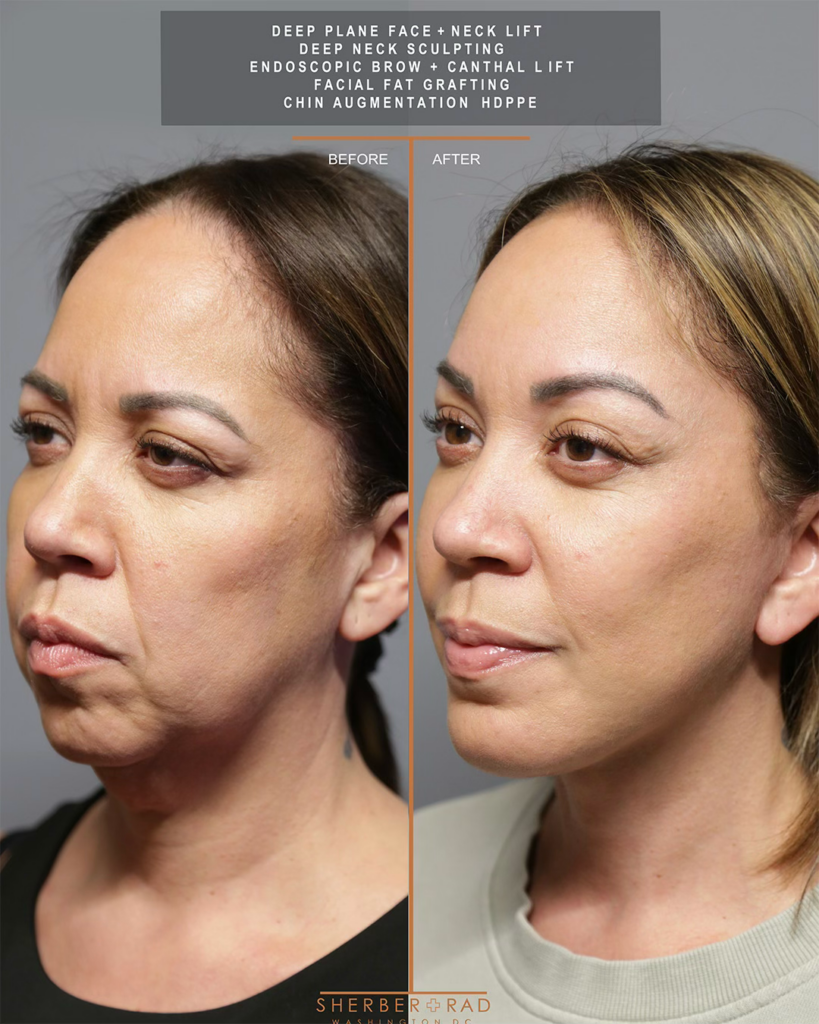
43 year old woman 6 months after endoscopic brow lift, deep plane face lift, deep structural neck lift, lower blepharoplasty, microfat grafting, chin augmentation.
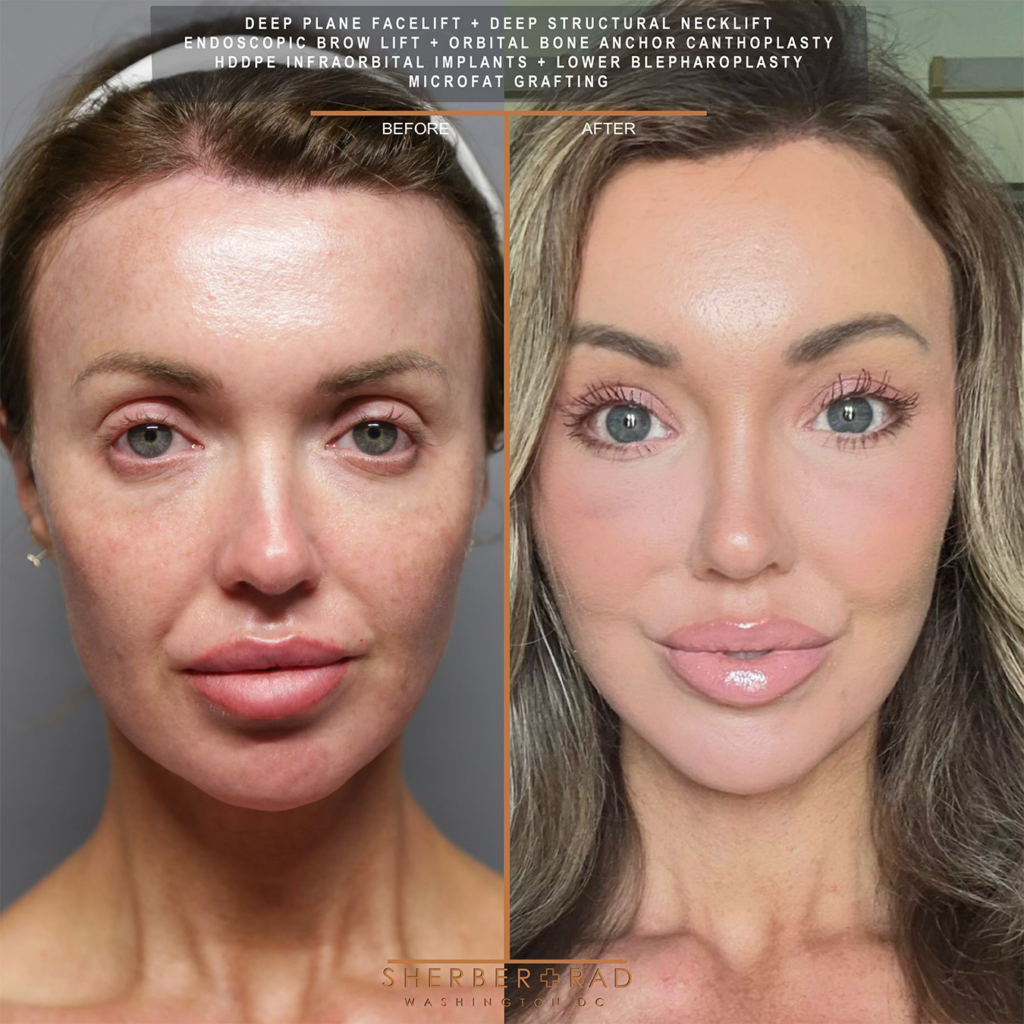
38 year old woman 2 months after endoscopic brow lift, canthoplasty (outer eye corner lift), deep plane face lift, deep structural neck lift, porous polyethylene orbital rim implants, lower blepharoplasty, microfat grafting.