By Dr. Ariel N. Rad
Understanding What Truly Creates a Natural Result
Over the years, I have met many patients who come to me after spending months researching facelift terms online. They arrive with long lists of branded techniques, trademarked names, and popular trends they have encountered on social media. What most of them want is simple. They want to look like themselves, only more refreshed. They want to avoid an operated look, and they want results that last.
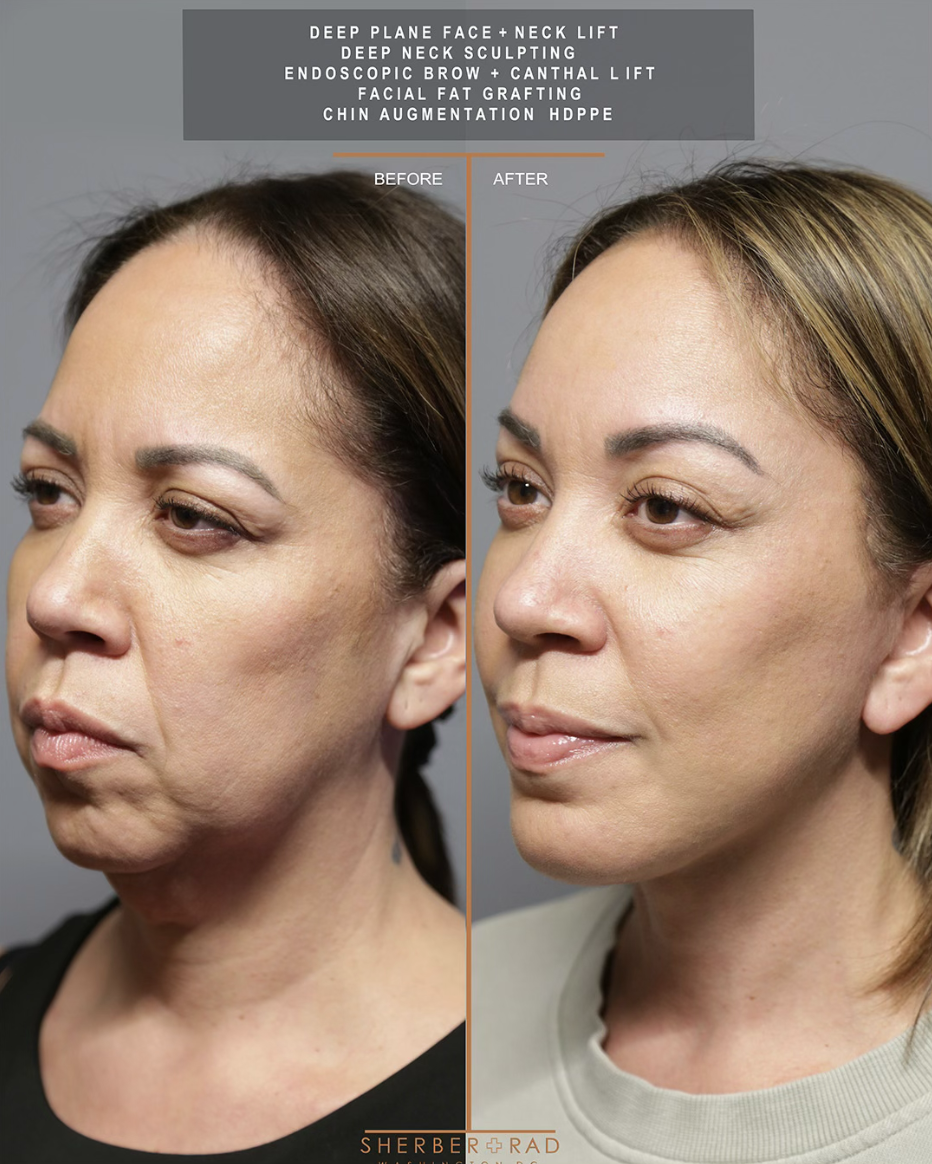
What they often discover during our conversations is that the outcome they are seeking has very little to do with a buzzword and everything to do with anatomy, artistry, and surgical judgment. The modern deep plane facelift is not a trend. It is a sophisticated, anatomy-based approach that focuses on repositioning the deeper support layers of the face rather than pulling the skin. The technique matters because the face itself is a complex structure that demands respect and precision. When performed well, the deep plane facelift achieves results that look completely natural because the improvement comes from restoring underlying support rather than stretching the surface.
Why the Deep Plane Matters
The term deep plane refers to a surgical layer beneath the muscles of facial expression. Working in this plane allows a surgeon to release the ligaments that tether in the midface and jowl region. This release is key to correcting the gravitational changes that develop over time. By addressing the deeper anatomy, we can elevate the cheek, define the jawline, and restore youthful balance in a way that looks harmonious.
Many earlier facelift methods relied on tightening the skin or the more superficial layers alone. While these techniques can create improvement, they often fall short in producing the most natural and longest lasting outcomes. Skin is not designed to hold tension. When it is over-tightened, the face can appear pulled, windswept, or simply unlike the person it belongs to. The deep plane method avoids these pitfalls by shifting focus to the structures that actually provide support.
Another important advantage is longevity. Because the deeper ligaments are released and repositioned, results tend to last longer than more superficial lifts. Patients appreciate that their improvements age gracefully over time rather than abruptly relapsing.
Experience and Training Shape the Result
In my practice at SHERBER+RAD, I have performed more than three thousand facelifts, and nearly all of them have been deep plane or hybrid deep plane approaches. Early in my training at Johns Hopkins, I was drawn to techniques that respected facial anatomy and preserved natural expression. With further subspecialty training in microsurgery and reconstruction, I gained an even deeper appreciation for the intricate network of nerves, vessels, and soft tissues that shape every face.
This experience informs every decision I make in the operating room. The deep plane facelift is not simply a technical maneuver. It is a philosophy of treating the face in its full three-dimensional context. No two faces are the same. The lift must be customized based on the patient’s unique structure, goals, and patterns of aging.
A technically correct deep plane facelift should never distort identity. It should enhance what is already there. Patients consistently tell me they feel like themselves again, only restored to a version that feels true and authentic.
Moving Beyond Trends and Marketing Terms
The aesthetic industry often gravitates toward catchy names and quick fixes. Every few years, a new term emerges claiming to be the next breakthrough. These phrases can be enticing, but they often oversimplify what is an intensely personalized process.
I always encourage patients to look beyond marketing and ask deeper questions. How experienced is the surgeon in facial anatomy. How many facelifts has the surgeon performed. Does the surgeon use hospital based anesthesia. Does the surgeon have a philosophy that prioritizes natural results over dramatic changes.
The deep plane facelift is not immune to being branded or repackaged, but at its core, it remains a technique grounded in real surgical principles. It is not a trend. It is the culmination of decades of anatomical study and refinement by many surgeons committed to achieving more authentic outcomes.
A Collaborative Approach Supports the Best Results
One of the strengths of our practice is the integration of dermatology and plastic surgery. My wife and partner, Dr. Noëlle Sherber, approaches the skin with a medical and scientific rigor that complements the work I do surgically. Healthy skin enhances surgical results. Thoughtful post operative care and long term dermatologic support help maintain those results for years to come.
By combining surgery, medical dermatology, and curated skincare in one environment, we help patients achieve a more complete and balanced rejuvenation. It is not about chasing perfection. It is about restoring harmony in a way that respects identity and supports long term well being.
The Importance of Choosing Substance Over Hype
The modern deep plane facelift represents the evolution of facial rejuvenation toward techniques that honor both form and function. It requires time, training, and meticulous attention to detail. It is not the fastest path, but it is the most thoughtful.
Patients today are more informed than ever, but they are also overwhelmed by information that does not always reflect medical reality. My hope is that conversations like this help people look beyond trends and seek care rooted in expertise, ethics, and a genuine commitment to natural beauty.
In the end, the most meaningful results are achieved not by chasing what is popular, but by choosing a technique that is grounded in science and performed with intention. That is why technique will always matter more than trend.
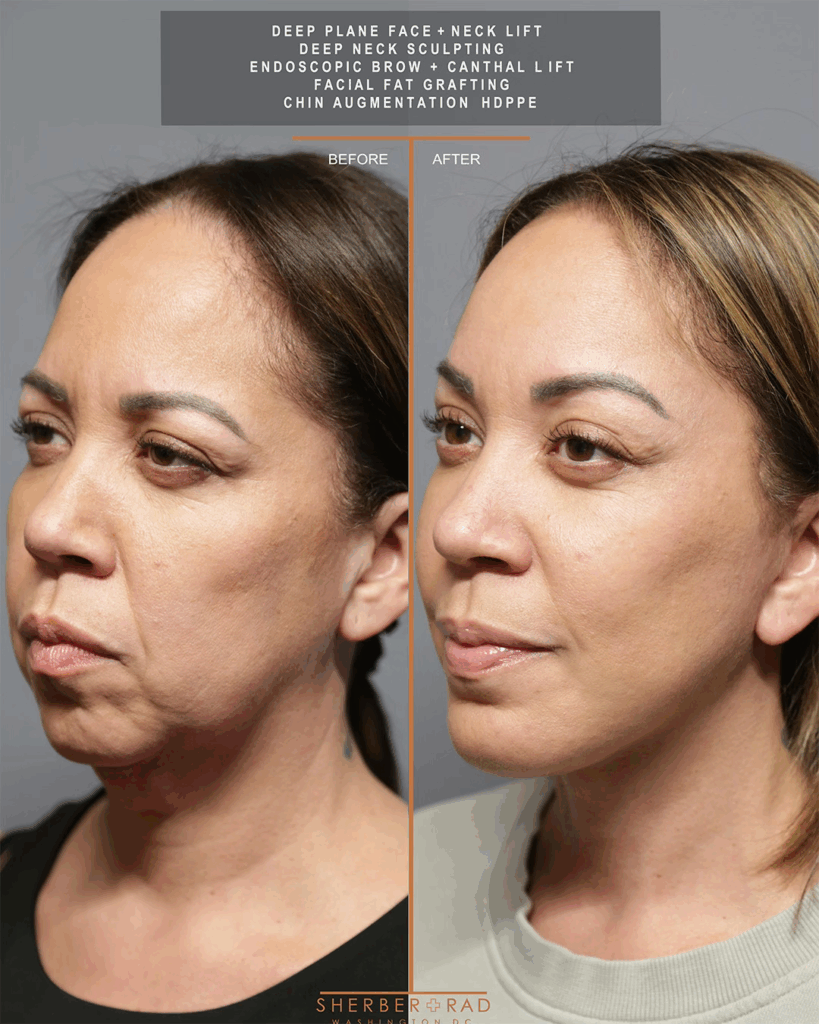
43 year old woman 6 months after endoscopic brow lift, deep plane face lift, deep structural neck lift, lower blepharoplasty, microfat grafting, chin augmentation.