By Dr. Ariel N. Rad
A Thoughtful Approach to Modern Facial Surgery
Over the course of my career, I have watched facial rejuvenation evolve in remarkable ways. When I began my training, the idea of performing meaningful facial surgery through small, hidden incisions was still considered innovative. Today, endoscopic techniques are an established part of my practice, and they allow me to achieve natural, elegant results with a level of precision that traditional methods could not always offer.
Endoscopic facial rejuvenation is often misunderstood. Some patients assume it is a shortcut or a simplified version of a traditional operation. Others assume it is only for younger individuals. In reality, the endoscopic approach is a refined surgical method that allows me to work deeply and accurately beneath the surface while minimizing visible signs of surgery. It is not about doing less. It is about doing better, with intention and with respect for the anatomy.
What Makes Endoscopic Surgery Different
Endoscopic facial surgery uses a small camera and narrow instruments inserted through tiny incisions, often hidden in the scalp. With the help of magnified visualization, I can work within the deeper layers of the face and forehead without needing the longer incisions that were once standard.
This approach is especially powerful for the upper face. The brow, temples, and forehead are areas where aging often creates heaviness, worry lines, or a tired appearance. Endoscopic surgery allows me to address these changes by releasing deeper structures and restoring the brow and upper face to a more harmonious position.
A key advantage is that I can do this without altering natural expression. Many people fear looking surprised or pulled after a brow lift. Modern endoscopic techniques avoid this by focusing on balanced repositioning rather than excessive lifting. The camera gives me a clear view of the anatomic landmarks, muscles, and nerves, so every movement is deliberate and controlled.
Smaller Incisions, Greater Precision
Patients often ask how smaller incisions can lead to such meaningful improvement. The answer lies in the plane of surgery. Endoscopic approaches allow me to work in deeper, more natural layers where aging actually occurs. When the deeper tissues are addressed, the surface layer, including the skin, can relax into a more youthful and natural position without being pulled tight.
These smaller incisions also offer a few additional benefits. They are easier to conceal, they generally heal quickly, and they reduce the risk of visible scarring. Many of my patients appreciate being able to return to their daily routines with confidence, knowing that signs of surgery are minimal. Endoscopic techniques have become especially valuable for individuals who value discretion, something that is very important in Washington.
A Method Built on Anatomy and Experience
Endoscopic surgery demands a deep understanding of facial anatomy. The instrument-assisted view magnifies details that are not always visible in traditional open approaches. This magnification enhances the accuracy of dissection and allows me to preserve delicate structures that control expression and movement.
My background in microsurgery has shaped the way I approach all facial operations. Working under a microscope early in my career taught me the importance of gentle handling, precise movement, and respect for the natural pathways of nerves and vessels. These same principles guide my endoscopic work. The camera becomes an extension of my vision, helping me perform refined adjustments that support long lasting results.
This technique is not selected for convenience. It is chosen because it provides clear technical advantages for the right patient. Not every face requires an endoscopic approach, but when it is appropriate, it can create a balanced and refreshed appearance without altering the character of the face.
Part of a Larger Rejuvenation Strategy
At SHERBER+RAD, facial surgery does not happen in isolation. One of the strengths of our practice is the seamless collaboration between dermatology and plastic surgery. When I rejuvenate the deeper structures of the face, I rely on Dr. Sherber to guide patients in restoring and maintaining skin health.
Endoscopic surgery pairs beautifully with thoughtful dermatologic care. When the underlying structure is elevated and supported, the skin reflects that change in a natural way. With evidence based treatments, patients can maintain their results for many years.
This integrated approach ensures that every patient receives a plan that addresses aging comprehensively rather than focusing on a single area. Surgery restores structure. Dermatology supports tone and texture. Curated skincare extends the longevity of both. It is a full circle model that benefits from being housed under one roof.
Moving Beyond the Idea of Minimally Invasive
Endoscopic facial rejuvenation is often labeled as minimally invasive, but I believe this phrasing can be misleading. The surgery itself is precise, detailed, and rooted in deep anatomical work. The goal is not to take shortcuts but to minimize the burden on the surface tissues while still providing a meaningful improvement.
The real value lies not in the size of the incision but in the quality of the result. When performed well, endoscopic techniques preserve natural expression, avoid visible distortion, and create subtle, refreshed changes that hold up beautifully over time.
Choosing What Serves the Patient Best
When patients come to me asking about the newest trend or the latest device, I guide the conversation back to what truly matters. Techniques should serve the patient, not the other way around. Endoscopic facial rejuvenation is an example of innovation that enhances safety, precision, and outcomes without sacrificing authenticity.
It is a thoughtful, anatomy driven approach, and when used in the right setting, it can help patients look more rested and balanced while preserving the individuality that makes each face unique. In the end, that is always the goal.
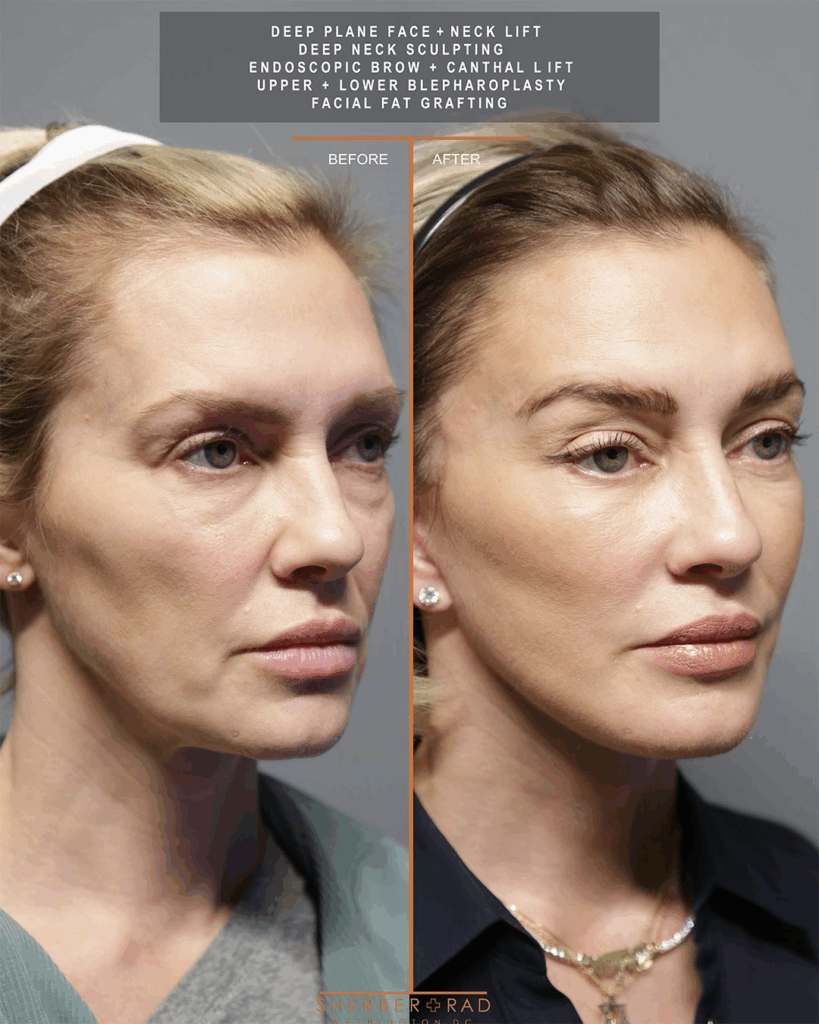
48 year old woman 6 months after endoscopic brow lift, deep plane face lift, deep structural neck lift, lower blepharoplasty, microfat grafting.
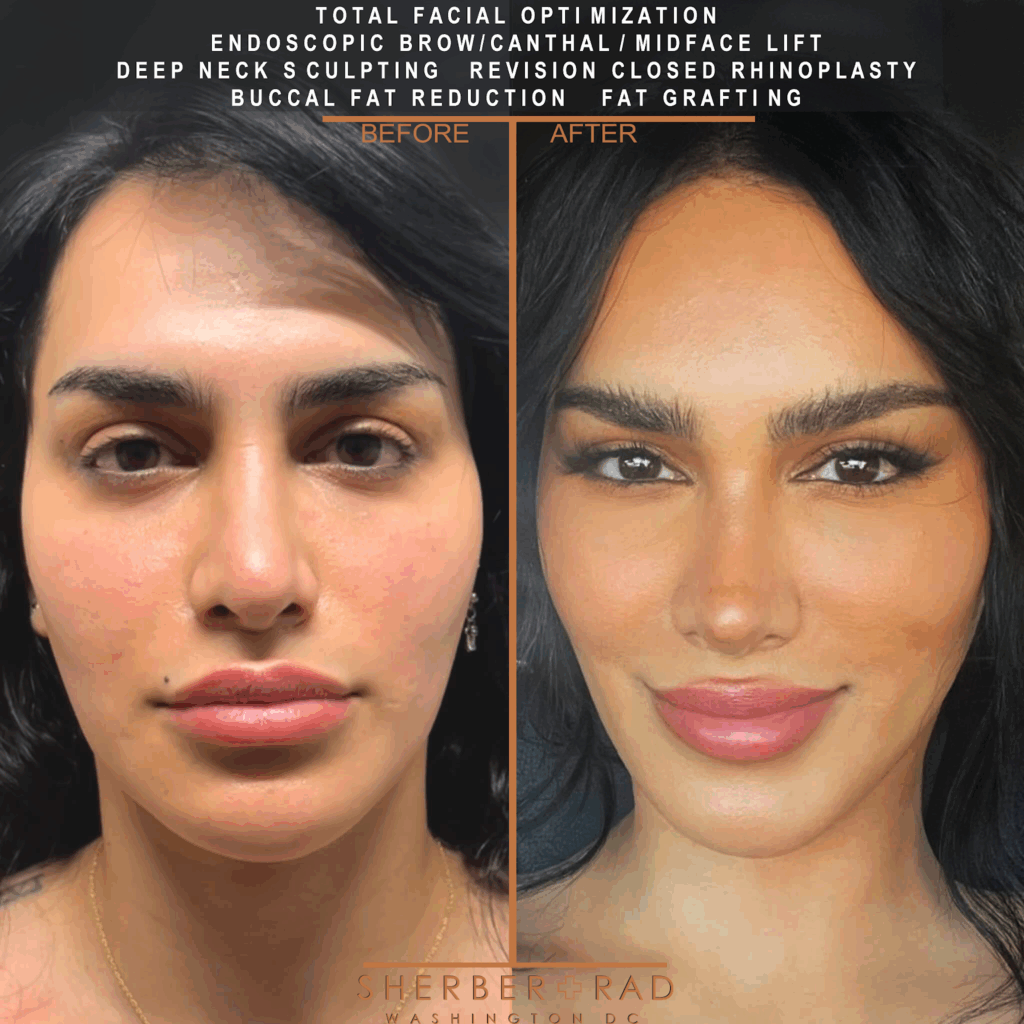
28 year old woman treated with endoscopic brow lift, midface lift and deep plane neck lift, facial fat grafting and closed revision rhinoplasty.